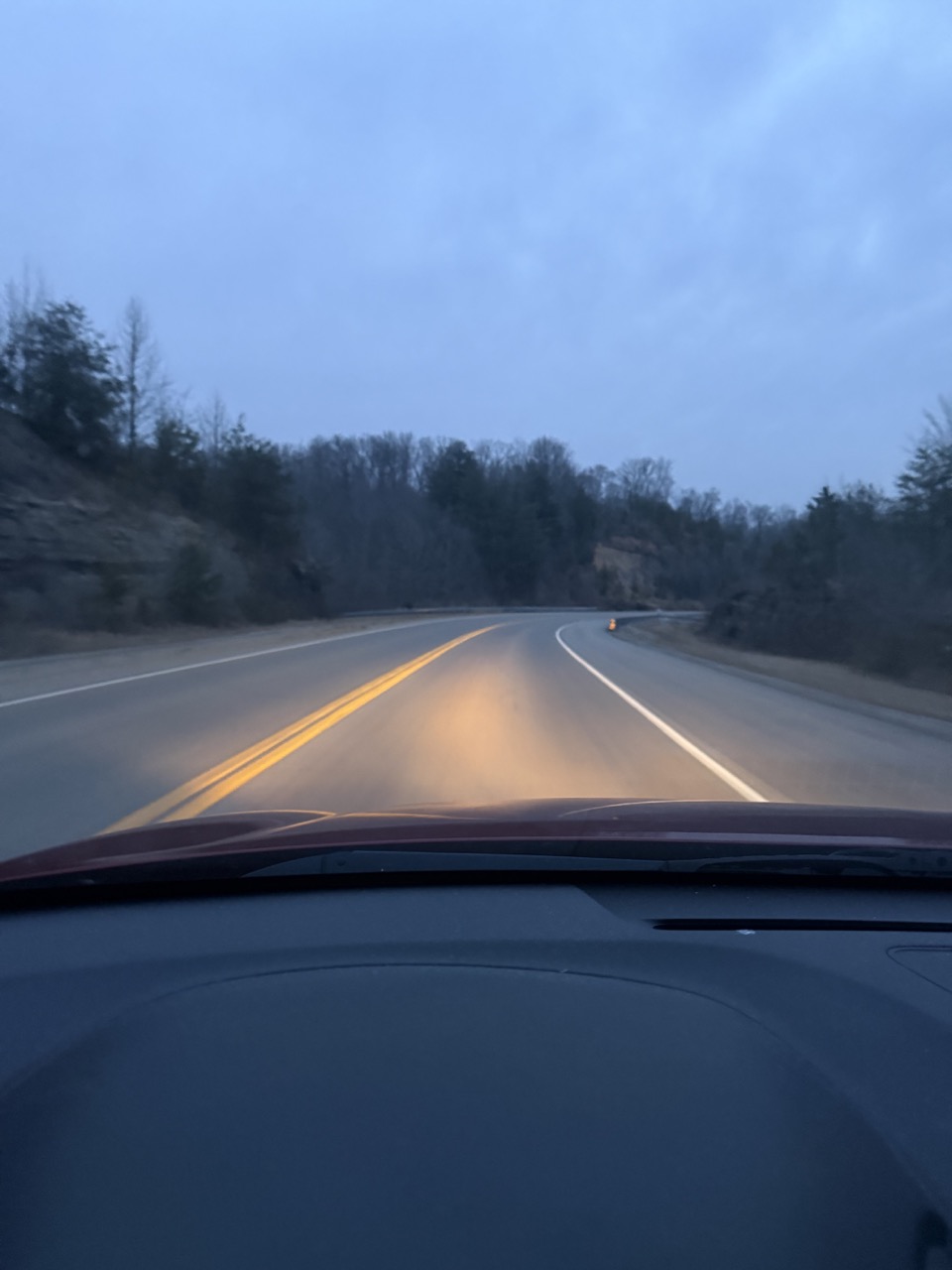
Every morning I get in my car and settle in for a 50–55 minute drive to school. For years, I’ve said that my commute was a gift. It was my thinking time, my processing time, my “figure-it-out-before-the-bell-rings” time.
At first, it really was. I’d mentally rehearse rehearsals, solve scheduling conflicts, reflect on a tough class, plan a better transition, etc. That quiet stretch of highway became a mobile problem-solving lab. But somewhere along the way, something shifted.
Instead of solving real issues, I started inventing them. My brain would scan for gaps, weaknesses, what-ifs, worst-case scenarios. By the time I pulled into the parking lot, I hadn’t prepared myself to teach—I had prepared myself to defend against problems that didn’t even exist yet. That’s when I realized something important: not all thinking is healthy thinking, so I changed my morning mindset.
Now, my commute isn’t about fixing. It’s about reflecting. It’s about zooming out instead of zooming in. Instead of obsessing over the small fires, I let myself sit with bigger ideas—culture, leadership, connection, growth, balance. Not problems that demand immediate solutions, but thoughts that deserve space. What follows are a few of my recent “morning commute thoughts.”
Morning Thought #1
I was thinking this morning about observation hours and student teaching placements for music education majors, and I think there’s something important that needs to be said. Not everyone is going to end up as a high school band director. I laugh when I talk to my college friends because almost all of us swore we were going to be high school band directors. That was the dream. Fast forward a few years… most of us are in middle school positions — and honestly? We’re happier than we probably would’ve been otherwise.
Here’s the issue I’m seeing: When music ed majors split placements between elementary and secondary, they almost always pick elementary and high school. On top of that, many are working marching band staff positions — which gives them even more high school experience. But very few are intentionally getting extra middle school experience. Then graduation comes… and guess what jobs are open? Middle school.
If your only experience with middle school music is the three years you were in it as a kid, you are going to feel wildly unprepared. Middle schoolers are their own universe. It’s not elementary. It’s not high school. It’s a completely different skill set. The good news? Anything you learn at the middle school level will absolutely translate if you end up getting that high school job you’ve always wanted. Classroom management, pacing, fundamentals, relationship building, rehearsal efficiency — those skills travel well.
So if you’re in college right now, go observe middle school. Ask to student teach there. Volunteer. Sit in. Watch how it works. You might discover you love it. And even if you don’t — you’ll be far more prepared than most.
Morning Thought #2
This morning on my drive in, I was thinking about something I wish I had truly understood my first year teaching: Classroom control does not equal classroom connection. I’m sure someone told me that at some point. I’m sure I nodded along. But I didn’t really understand what it looked like in practice.
That first year, I thought the goal was an iron grip. Authoritarian. Tight ship. No cracks. If kids were quiet and compliant, I assumed I was doing it right. And to be fair—we still made good music. We were successful by most outside measures. But looking back, I’m not sure the connections were the same. Don’t get me wrong—control matters. Students need structure. They need to know who’s leading the room. My students absolutely know I’m in charge. But my classroom looks very different now than it did ten years ago.
There’s more back-and-forth. More conversation. More guided learning instead of just lectures. More ownership on their end. And I’ve learned something big: a well-timed joke can reset a room just as effectively as raising your voice ever could. Control might get you compliance but connection gets you buy-in. And buy-in? That’s where the real magic starts.
Morning Thought #3
There’s a sign you pass when you walk into my school that basically says: Everyone who enters through these doors is responsible for the energy they bring into this building. Think about who that includes. Yes, students, but also teachers, instructional monitors, administrators, secretaries., nurses, cafeteria staff, custodians, counselors, parents… Everyone!
What if we actually took that seriously? How different would our school cultures look if every single person owned the energy they brought into every room, every meeting, every hallway interaction? How quickly could things shift? What if, when we saw a problem, our first instinct wasn’t to figure out who’s to blame or whose job it is to fix it… but instead to look for a solution
That sign makes me think about how culture isn’t created by one big event. It’s not built by copying whatever flashy idea another school is doing and hoping it magically transforms everything. Culture is built in moments. Maybe it’s a smile in the hallway. Maybe it’s a little grace on a late assignment. Maybe it’s being the one adult who listens to a kid who had a long, lonely weekend.
Schools don’t change because of one great program. They change because of consistent energy — repeated over and over again by the people inside the building. I don’t know what “best energy” looks like in your situation today. But I do know this: You’re bringing something through those doors. Make sure it’s intentional.
Joshua Dawson
Corbin Middle School
Corbin Independent School District
Grades 6-8